Mountainous Melanoma! Elevated Erythema! It’s High Altitude Sunburn!

August 31st, 2010 by Guest Author

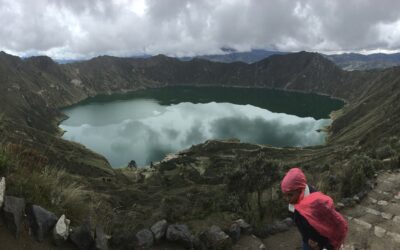
Beach season may be drawing to a close in the Northern Hemisphere, but it’s not too late to get a really nasty sunburn, especially if you’re traveling to a high altitude area.  A study conducted by the Ronald O. Perelman Department of Dermatology at the New York University School of Medicine suggests an approximate 8 to 10 percent increase in ultraviolet intensity for each 1,000 feet of elevation across the studied altitudes. UV-B intensity decreases as light moving toward the Earth is scattered, reflected and/or absorbed. The higher the altitude, the more intense the UV-B light exposure can damage unprotected skin.

If you are hiking at 8,500 feet, you are exposed to almost 60% more sun than you would be at the beach. It’s no surprise, then, that at higher elevations, people who normally tolerate the sun well, may not, and people who burn easily at the beach are at severe risk. In less than twenty minutes, fair-skinned people may notice their skin becoming red and sore, even if they are a lightly shaded by trees overhead. Reflected light from snow or water aggravates the situation even more, as many vacationing skiers have found to their chagrin.

With the increased exposure to UV-B, the expected annual non-melanoma skin cancer rate for year-round residents at 8,500 feet is estimated to be approximately 115 percent greater than those living at sea level at the same latitude.

So it’s not just leisure travelers who need to take precautions. Expats should know that living at high altitudes and suffering repeated sunburns can have lasting effects. The National Institutes of Health reminds us that living at high altitudes is a definite risk factor for melanoma, or skin cancer.

Take extra precautions when traveling or living at elevations significantly higher than sea level. Be sure to pack sunscreen (SPF 70!), and apply it often and liberally. And don’t forget to pack your sunglasses—intense sunlight is damaging to the eyes too. More on this important issue later.

Author: Melissa Haertsch
Melissa Haertsch, a guest contributor to the Healthy Travel blog, is a freelance writer specializing in healthcare, travel and fine food. She favors outdoor-related journeys, which she launches from her home in the Endless Mountains of Pennsylvania.

Photo by Sicran.

  • Share/Bookmark

Take a Vacation! It’s Good for You

August 30th, 2010 by Guest Author

A recent article in the Wall Street Journal addressed two studies that show the health benefits of planning and taking a vacation.  According to the studies, wellness factors such as health status, mood, and tension, energy and satisfaction levels all improved before and during vacations.  Unfortunately, these factors all dropped back to their original levels or lower after returning to work.  On the other hand, the studies also showed that increased happiness can come just from the anticipation of having a planned vacation in the future.

Many health benefits from vacation have been shown through studies over time.  According to a past article in the New York Times, the Framingham Heart Study, which was published in 1992, found that women who took a vacation once every six years or less were almost 8 times more likely to have a heart attack or develop heart disease than women who took at least two vacations each year.  Over 9 years, the study also followed 12,000 men who were at risk of heart disease, and the men who went on more frequent vacations lived longer.  The article also stated that even two to three days of vacation can lead to more and better quality sleep.

Taking a vacation, however, means checking out mentally, not just physically.  According to a study done by professors at Tel Aviv University, the benefits of a vacation are not the same for people who are constantly checking their work phone or email.  People who are constantly connected to work while away are more likely to experience burn out.  For your health, put the Blackberry away, pick a destination, and start planning your next vacation!

Author: Christie Erdman
Christie Erdman, a guest contributor to the Healthy Travel blog, is a recent graduate of the University of Richmond with a degree in Economics and Marketing.  She enjoys traveling, and had the opportunity to spend a semester studying at Universita Bocconi in Milan, Italy during her junior year.

  • Share/Bookmark

Ask the Author – The Fever’s Sonia Shah takes your questions

August 27th, 2010 by Andy Orr

As a follow up to Mike’s post earlier this month on The Fever: How Malaria Has Ruled Humankind for 500,000 Years, Sonia Shah’s recent book on malaria, we noticed that the Freakonomics blog will pass your questions onto Shah and post her answers.

I once had a question on copyright law answered by Laurence Tribe in this way.  It is very cool to get this sort of personal response, so check it out at Battling Malaria:  Bring Your Questions for Sonia Shah.

  • Share/Bookmark

Honduras Continues to Battle Dengue Fever

August 23rd, 2010 by Moira Bishop

Throughout the summer dengue fever has continued to crop up in the U.S. and around the world as regional rainy seasons produce safe havens in which disease-carrying mosquitoes can breed. This week,  the U.S. Embassy in Honduras is reminding travelers of the large numbers of cases of classic dengue and, the more dangerous, hemorrhagic dengue that continue to appear in and around Tegucigalpa, Olancho, San Pedro Sula, Choluteca, and El Paraíso.  Honduras is seeing greater numbers of the virus than it has in fifteen years with 44,866 classic and 1,299 hemorrhagic cases and 56 deaths being reported so far this year.

If you are traveling to Africa, the South Pacific, Central and South America, the Caribbean, the Middle East or any other area recently impacted by dengue fever, take the necessary precautions to protect yourself from the dangerous bite of mosquitoes.

Photo by LeRoc.

  • Share/Bookmark

Counterfeit Medications: A Serious and Growing Problem

August 20th, 2010 by Andy Orr

CNBC recently ran a piece about counterfeit products in the marketplace highlighting the growing problem of counterfeit medicines.  While the U.S. Food and Drug Administration (FDA) recognizes that counterfeits threaten the safe drug supply in the United States (see the FDA’s Counterfeit Medicine web page), the problem is even more acute outside the U.S. and other countries where medications are highly regulated.  International travelers need to be more and more vigilant about how they purchase medicine abroad.

The World Health Organization has addressed this global issue by the formation in 2006 of a global taskforce called IMPACT (International Medical Products Anti-Counterfeiting Taskforce).  As IMPACT’s web site points out, “Counterfeiting is greatest in regions where regulatory and enforcement systems for medicines are weakest.”  Specifically, most industrialized countries are relatively safe, but the risks are greater “in many African countries, and in parts of Asia, Latin America, and countries in transition.”  Of course, counterfeits are well represented among medicines ordered over the Internet.  Many online sources (this seems fairly obvious to me) are not playing by all the rules and are more likely to be selling fakes.

The counterfeiters seem to be medication agnostic.  Nothing is safe.   If you have to get new medicine while away from home, it makes sense to go to a trusted pharmacy or doctor. An international medical assistance company may be able to help you. HTH Worldwide (which sponsors this blog) equips its customers with the names of carefully selected doctors and notable pharmacies in hundreds of destinations around the world. No matter how you make your purchase, inspect the packaging carefully. Unfortunately, counterfeiters have become extremely sophisticated; most of the time, a visual inspection will only detect an obvious problem.  In response, the drug industry is working on anti-counterfeit measures employing high technology. New Scientist magazine has detailed some of the countermeasures that are being developed to fight fake drugs (subscription required to see the whole article).  The time is coming when each pill can be tracked and validated by the consumer prior to use.

We’ve all encountered knockoffs from gregarious sidewalk vendors hawking convincing copies. (Quick aside: I once had a potentially embarrassing conversation with a street vendor of handbags in New York City.  He was from Senegal, and I asked him if he lived near Dhaka. World capitals gone awry – Dhaka is the capital of Bangladesh!  He heard “Dakar” and thought I really knew my way around West Africa).  Counterfeit handbags may pose some risks (not colorfast?), but nothing like taking, literally, a poison pill.  Make sure the medicine you are taking comes from a trusted source.

  • Share/Bookmark

NDM-1 (Antibiotic-Resistant Suberbug): Q&A with a Specialist in Infectious Diseases and Microbiology

August 18th, 2010 by Guest Author

The antibiotic-resistant enzyme, the carbapenemase NDM-1, has been appearing in recent headlines across the globe. For that reason, the Healthy Travel Blog requested some perspective on the situation from Dr. Vanya Gant, a Specialist in Infectious Diseases and Microbiology in London.  Here are his thoughts on the background, risk and future of this “superbug.”  

NDM-1 is one of several enzymes which destroy carbapenem antibiotics such as meropenem, imipenem, doripenem and ertapenem and are therefore called carbapenemases. By breaking down the carbapenem groups of antibiotics, these can no longer be relied on to treat infections. NDM-1 stands for New Delhi metallo-beta-lactamase 1.

The carbapenem group of antibiotics are powerful antibiotics for treating Gram negative bacteria (coliform bacteria such as E.coli and Klebsiella species) which can cause urinary tract infections, and are responsible for a considerable proportion of Hospital Acquired Infections.

The genetic material that leads to the production of the carbapenemase enzyme is found on a small mobile element (referred to as a plasmid – a sort of virus within a bacterium) that can easily pass from one bacterium to another. This ability to transmit from one bacterium to another implies that there is an alarming potential for it to spread among many other bacterial populations.

Q: Is this the first time that a carbapenemase has been described?

No. Other carbapenemases called VIM, KPC and OXA have been identified in Klebsiella species. These have caused problems in Greece, Turkey, USA and Israel.

Q: Where do these come from?

The rise of another antibiotic resistance enzyme, ESBL (extended spectrum β lactamase), which made Gram negative bacteria resistant to the cephalosporins, has led to an increase in the use of the carbapenems. This in turn has provided a selection pressure for carbapenem resistance to emerge, and is yet another example of the remarkable ability of bacteria to adapt and eventually become resistant to new antibiotics. This is made much easier by the existence of these “bacterial viruses” called plasmids, which can transmit easily from bacterium to bacterium.

Q: What is the risk of this enzyme?

It means that a very effective class of antibiotics may no longer be used for treatment of infection.

What’s more, it would appear that the plasmid carrying this resistance also carries resistance to other antibiotics. This means that once predictably powerful and active antibiotics such as the modern penicillins and cephalosporins, and other antibiotic classes such as the quinolones (such as ciprofloxacin), and the aminoglycosides (such as gentamicin – a hospital antibiotic) may not always work.

Q: Can NDM-1 still be treated?

The bacteria carrying the NDM-1 resistance enzyme remain sensitive to individual aminoglycosides and aztreonam, and many, if not most, isolates remained susceptible to colistin and tigecycline. Combinations of antibiotics are used to treat it.

Q: Are there new antibiotics that could help?

While there is large investment in research to find new antibiotics, currently there are no plans to approve or license one that could provide a single solution.

Q: How is it spread?

NDM-1 can spread from person to person in hospitals, hence the importance of environmental cleaning and hygiene as well as individual personal hygiene. In India it has spread outside hospitals through contaminated water in which people bathe, wash clothes and also defecate.

Q: Why is it a problem?

Ultimately, NDM-1 strains could produce dangerous infections that would spread rapidly from person to person and be almost impossible to treat.

Human air travel and migration allow bacteria and their plasmids to be transported rapidly between countries and continents. Much of this dissemination is undetected with resistant clones carried in the normal human flora (in their intestines mostly) and only becoming evident when they are the source of endogenous infections.

NDM-1 is widespread in India and Pakistan and has arrived in several distant countries as a result of global travel. While a particular issue for the UK, medical tourism for procedures such as transplants, pregnancy care and cosmetic surgery, has been a contributing factor for other developed nations.

The potential for wider international spread of NDM-1 plasmids and other similar novel antibiotic resistance genes to become endemic worldwide is clear and frightening.

Q: What can be done to stop it?

Individuals must be aware of the possibility that they may pick these strains up if they receive medical care in India and Pakistan.

It is currently extremely unlikely that they will pick these strains up in other countries — even though they have been found, they continue to be very rare.

It remains axiomatic that the best way to protect oneself against these resistant organisms is to be very aware of one’s own personal hygiene, and to make sure that wherever possible any healthcare received is from accredited units offering the very best levels of infection control and antibiotic stewardship.

Author: Dr. Vanya Gant
Dr. Vanya Gant, PhD, FRCP FRCPath is a specialist in Infectious Diseases and Microbiology.  He is Divisional Clinical Director for Infection at University College London Hospitals Trust in London, England.  In addition to patient care and clinical service redesign, Dr. Gant develops new techniques and materials for combating infection. He has appeared in several Public service and independent programs on matters of infection and microbiology, some of which he co-wrote.  In his free time, he enjoys and plays music, rides fast motorcycles, pilots paragliders, cooks and is an aspiring dance music DJ.

  • Share/Bookmark

New Antibiotic-Resistant Superbug Appears in Medical Tourists

August 18th, 2010 by Frank Gillingham, MD

Last week the British Medical Journal The Lancet reported that a new bacterium resistant to almost all antibiotics, coined  New Delhi metallo-lactamase-1 or NDM-1 has emerged from India and Pakistan, and infected patients in Canada, the United States, Australia, Sweden, and a number of other countries.

Labeled “superbugs” by medical authorities, these bacteria resist strong antibiotics that are administered only when more common ones have failed. The NDM-1 gene mutation has been identified on plasmids- small fragments of DNA that easily move from one bacteria strain to another.  The gene spreads primarily among bacteria that frequently cause respiratory and urinary tract diseases.

The vast majority of NDM-1 infections have occurred in “medical tourists” who traveled to South Asia for elective surgeries such as face lifts, dental implants, hip replacements and even organ transplants. The Lancet researchers found that 37 Britons who had been treated in India and Pakistan carried NDM-1 bacteria when they returned to the United Kingdom.  They also reported that dozens of bacteria samples with the NDM-1 gene had been discovered in two Indian cities, speculating that local hospitals probably were overusing antibiotics.

Indian health authorities have been quick to retort, claiming that the Lancet report was seriously flawed and underwritten by foreign pharmaceutical companies who stood to gain from a global panic.    “It’s all hype and not as bad as it sounds,” said Karthikeyan Kumarasamy, lead author of a March report in the Journal of the Association of Physicians in India outlining the risks posed by NDM-1. “The threat of the NDM-1 is not that big as, say, H1NI (swine flu).”  He added “”The conclusion that the bacteria were transmitted from India is hypothetical. Unless we analyze samples from across the globe to trace its origin, we can only speculate.” 

Whether or not the new drug resistant strains can be traced back exclusively to South Asia, the possibility alone should remind us that obtaining health care in other countries, does have its risks.  Many of the medical facilities in India and other developing countries are first class, and staffed by well trained physicians. They are able to provide the same level of care as can be found in the United States.  Nonetheless, the globalization of medical care may inadvertently permit “superbugs” such as the NDM-1 bacteria to emerge and rapidly spread across the globe.

  • Share/Bookmark

India: H1N1 Endures

August 17th, 2010 by Frank Gillingham, MD

The pronouncement last week by WHO Director General Margaret Chan that the H1N1 pandemic is officially over apparently ignores the latest reports from India.  Health officials in the world’s second most populous nation say that the number of new H1N1 cases for the week of August 2-8 reached a new peak for the current season with 942 cases resulting in 83 deaths.

One of India’s leading health officials stated “Many would say the virus has now settled down to replace the seasonal influenza strain. But there is no doubt that H1N1 continues to infect Indians in large numbers. A majority of those who died were pregnant women and the elderly — the vulnerable group.”  The state of Maharashtra saw the most victims, recording 400 confirmed cases and 51 deaths. Karnataka was second with 200 cases and 12 casualties, while Andhra Pradesh, with 105 cases and six deaths, was third. Overall, India has been one of the countries hit hardest by the H1N1 virus, with nearly 37,000 cases and 1,833 deaths since the outbreak began in May of last year. To put these numbers into perspective, seasonal flu historically has a death rate of 1 per 1,000. Worldwide the H1N1 virus has killed nearly 1 in 100. In India, H1N1 has killed about 1 in 50.

WHO’s Chan has responded to criticism that her announcement was premature, saying “Based on experience with past pandemics, we expect the H1N1 virus to take on the behavior of a seasonal influenza virus and continue to circulate for some years to come.” She added that isolated outbreaks are likely to occur, given the extreme virulence of the virus.  Others have pointed out that the H1N1 virus may not have finished mutating, and could become even more deadly over the next several years.

As HTB reported earlier, millions of H1N1 vaccine doses have expired and already been destroyed, with millions more set to expire over the next few months.  The reports from India should remind us that although the pandemic may have faded, the virus has not.  The Centers for Disease Control indicates that the 2010-2011 seasonal flu vaccine scheduled for shipment next month will include immunization to the 2009 strain of the H1N1 virus. Anyone travelling overseas not previously immunized against H1N1 should avail themselves of the seasonal flu vaccine.

Photo by ghinson.

  • Share/Bookmark

Attack of the Blobs: Jellyfish Once Again Jam the Seas in Spain

August 13th, 2010 by Moira Bishop

Last August, we blogged about the increase in jellyfish encounters around the world – especially citing abundant reports from Spain and the surrounding Mediterranean region.  This issue has resurfaced (pun intended!) one year later as reports rolled in this week that the number of swimmers on Spain’s Costa Blanca reporting jellyfish stings has leaped from a typical five to nearly 400 per day.

Marine scientists do not expect these numbers to drop soon or the trend to reverse. Fishing boats are working to haul large masses of the creatures away from swimmers, and the Spanish government is taking steps to educate beach goers to the risk of stings and the art of post-sting care. But as long as water temperatures continue to warm and excessive numbers of natural jellyfish predators are pulled from the waters, there is no sure way to stem the wave of stinging blobs .

Jellyfish can pop up anywhere so whether you’re at the Jersey Shore or the Costa Blanca, be aware of who is sharing the ocean with you.

Photo by Marie Axelsson.

  • Share/Bookmark

Fires Still Threaten Health in Russia

August 12th, 2010 by Frank Gillingham, MD

After weeks of fighting a losing battle, Russia may finally be getting a grip on the drought-driven wildfires that have destroyed over half a million acres within 250 miles of Moscow.  It was not until last weekend that the government was able to declare “it was putting out more fires than were appearing.” 

The spiraling disaster revealed incompetence and corruption that undermined firefighting efforts and the credibility of the government.  Only recently did authorities admit the staggering effects of the forest fires and heat wave.  In addition to 52 deaths directly attributable to the fires, the death rate in Moscow from all causes has doubled compared to the same period last year, according to Moscow’s senior health official.

The failure to contain the fires has spawned a wave of concern that the conflagration may yet spread to the Bryansk region in western Russia where the soil is still contaminated by the Chernobyl nuclear disaster. It’s not clear that the fires will produce radioactive smoke, but fears remain.

Russian authorities are also worried about the fires around the city of Sarov in central Russia which houses the country’s main nuclear research center.  Satellite images have shown the fires are easily visible from space, and NASA has said the smoke has at times reached over six miles into the atmosphere.

This dicey situation has led the United States, France, Germany and other European countries to issue travel warnings discouraging all non essential travel to the region. 

Russian officials are advising residents to stay inside their homes, hang wet blankets in rooms to catch dust particles, wear masks and rinse out noses and throats as much as possible, and leave the area if suffering from a chronic lung disease such as asthma or chronic obstructive pulmonary disease. For additional tips and resources, visit hthbusiness.com

Visitors to Moscow and environs should check with embassy staff to learn the latest on the availability of flights and the advisability of other modes of transit.

Photo by Todd Huffman.

  • Share/Bookmark